


of our employees are women
of our actively managed public companies count at least 30% women on their Boards of Directors
of our Canadian employees identify as members of visible minorities, ethnic minorities or Indigenous peoples
pre-investment opinions issued confirming compliance on tax practices
A culture strengthened by inclusion
At La Caisse, we believe that a wealth of backgrounds and viewpoints reinforces both our culture and our collective performance. By continuously developing our inclusion practices and focusing on openness, ambition, collaboration and accountability, we create an environment where everyone can be themselves, feel valued and contribute to their full potential.
In 2025, we achieved the EDGE Lead certification, the highest level of EDGE certification. This recognition acknowledges the strength and scope of our actions to promote gender equality. The assessment covered recruitment processes, pay equity mechanisms between genders, and the effectiveness of policies and practices that support equitable career pathways within the organization. This recognition builds on our EDGEplus certification, which had already attested to the maturity of our practices and for which we obtained recertification during the year.
A mobilizing and equitable workplace
We regularly check in with our employees through anonymous surveys that measure commitment and job satisfaction. We also include questions about our initiatives to promote inclusion, including gender equality. The feedback we receive guides our implementation of targeted measures.
In 2025, we carried out a pay equity review in Québec, where close to 90% of our employees are based. The review confirmed that each predominantly female job category benefits from equal pay potential compared to predominantly male jobs of equivalent value, in accordance with Québec’s Pay Equity Act. The same principles of equity apply across all our offices worldwide.
Valuing the diversity of our people
At La Caisse, our people can rely on five employee resource groups that support our culture of openness. In 2025, we organized 19 themed activities drawing on the varied experiences of our personnel.
Our employee resource groups are open to all employees:
- Les Investies, for women in investment
- Carrefour Diversité, for colleagues from ethnocultural minorities
- Le groupe Fierté, for the organization’s LGBTQIA2S+ colleagues
- Femmes en tech, for women in technology
- Neurodiversité, to leverage the differences and uniqueness of neurodivergent people
A diverse and inclusive workplace
La Caisse brings together talented individuals from all walks of life, genders and across a wide range of ages (Figure 8). This collective wealth helps inform our decisions and enhance our performance.
It also demonstrates our commitment to ensuring that the organization can draw on a broad range of expertise and experience.
Lastly, we also continued to roll out our Action Plan for Persons with Disabilities for the 5% of our Québec employees with disabilities.
A wide variety of ages among our employees
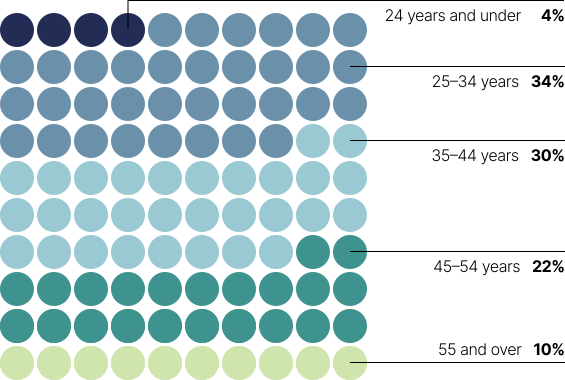

Data as at December 31, 2025
of the members
of the Board
are women
of Executive Committee
members are women
of our employees
are women
of our employees in Canada identified as
members of one of the following groups:
visible minorities, ethnic minorities or Indigenous peoples
Safe and flexible work environment
We adhere to the highest standards to provide a workplace in which our employees can thrive. Accordingly, our Policy - Workplace Equity, Diversity and Inclusion, which sets out our commitments in this area, was updated in 2025. Our Policy Against Harassment, Violence and Other Types of Misconduct sets out guidelines for professional conduct and respect in the workplace. It lists the resources available to employees should any issues arise.
To ensure that our workplace remains a safe and healthy environment, we organize themed awareness-raising activities throughout the year. In 2025, 305 employees took part in them.
Measures to achieve work-life balance
In all the regions where we have offices, we offer paid maternity leaves of at least sixteen weeks and paid parental leaves of at least five weeks for the second parent. In Montréal, a child daycare centre adjacent to La Caisse is also available to employees. Furthermore, flexible working hours, subject to the manager’s approval, as well as a work model that combines working in the office with remote working days, enable everyone to find a balance while making an optimal contribution to the organization’s ability to fully carry out its activities.
Taking social factors into account in our investment strategy
When analyzing investment opportunities or in our post-investment monitoring, we consider social factors based on their materiality, in accordance with the internationally recognized Sustainability Accounting Standards Board (SASB) framework. We also carefully examine the background of each company or partner. For more information on our assessment process, see the Governance section.
Optimized processes
In 2025, we optimized our internal pre-investment due diligence processes. Two risk factors related to human rights as well as conflict-affected and high-risk areas were added to the sustainability analysis. This enables us to better understand sectoral and geographical risks.
We have also developed analytical tools to better evaluate companies’ maturity with respect to social issues. We have created rating templates covering topics such as supply chain management, human rights and community relations, employee health and safety, and labour practices. The templates enhance our sustainability analyses and, depending on the context, allow us to then discuss social issues with portfolio companies after the initial investment, to improve their performance.
Our human rights commitments
We are making sustained efforts to improve our human rights practices. We have implemented continuous due diligence procedures, and human rights issues are taken into account in our investments based on their materiality. Our Human Rights Policy sets out our framework for action.
- Pre-investment: background checks, sustainability analyses and excluded sectors
- Post-investment: monitoring of issues, shareholder voting and engagement activities
Over the course of the year, we continued to participate in the PRI Advance initiative. Supported by the United Nations, this initiative seeks to foster collaboration between investors and advance progress on human rights.
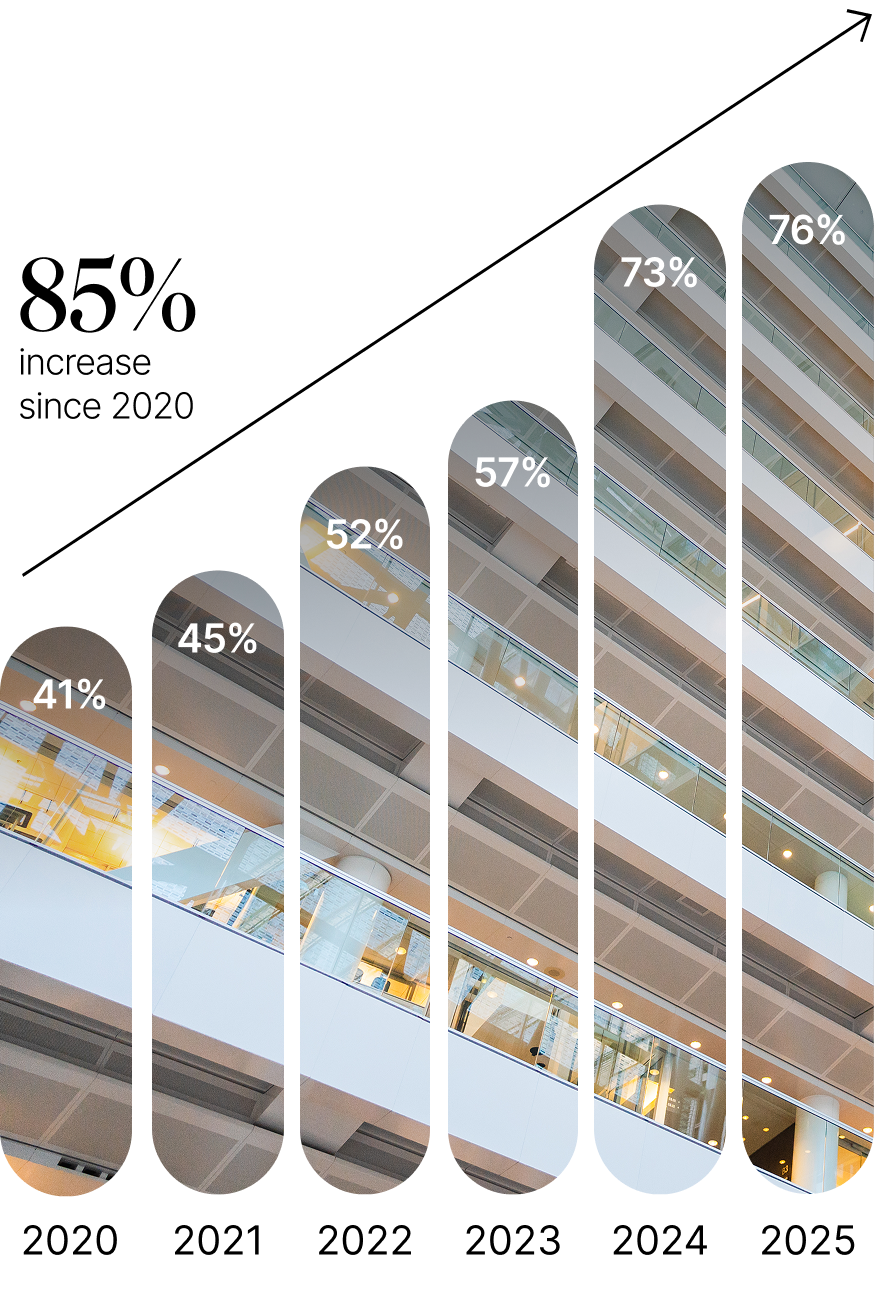
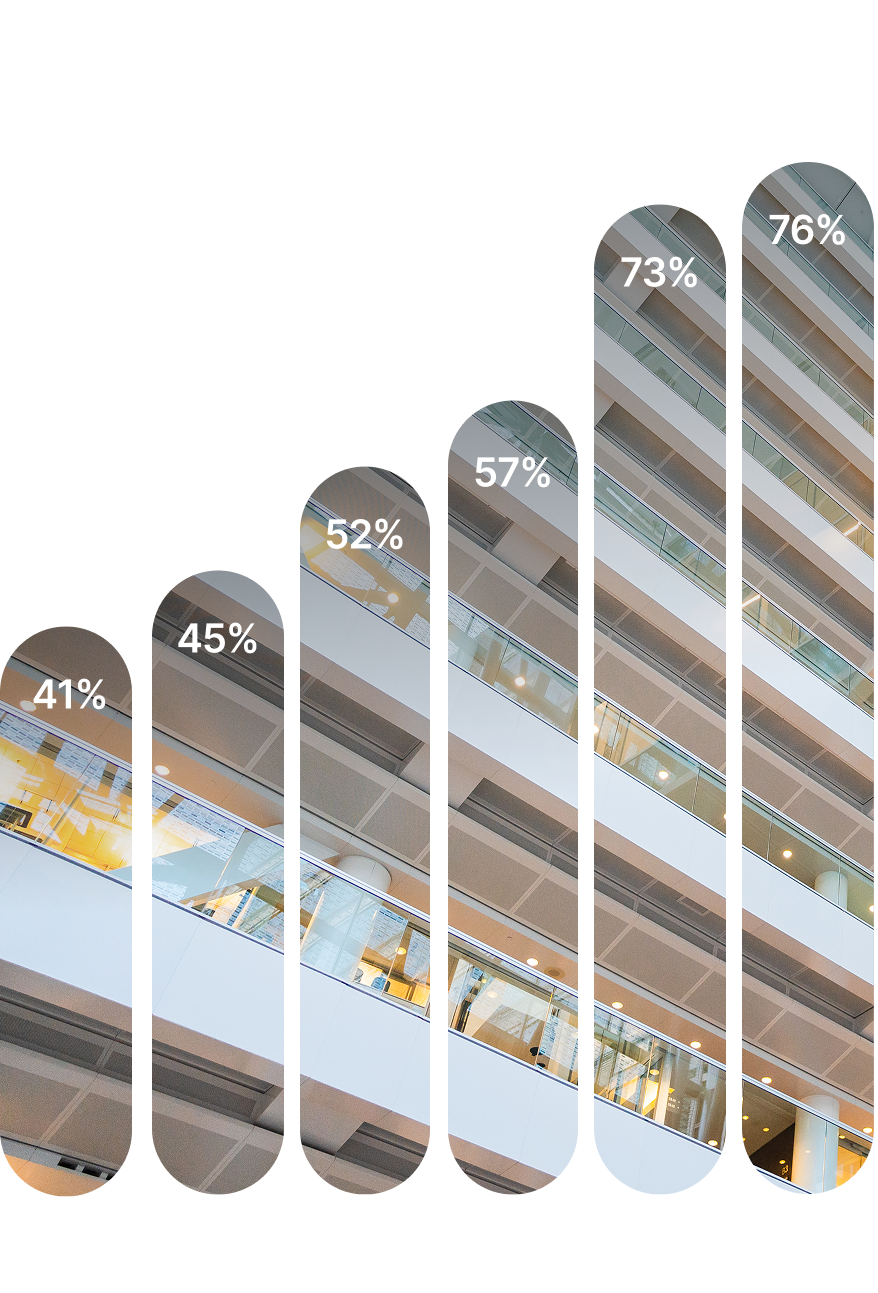
Actively managed public portfolio companies where women make up at least 30% of the Board
Board of Director Diversity
The Boards of Directors of our portfolio companies and external managers must comprise a diverse range of profiles in order to foster innovation, growth and better risk management.
In the absence of extenuating circumstances, we may vote against the appointment of Board members if a public company has less than 30% women on its Board. Since 2025, in certain targeted jurisdictions, we also reserve this right if a company does not have at least one member from an underrepresented group. For more information, see our Policy – Exercise of Voting Rights of Public Companies.
We use our influence to drive action. For example, we engage with certain companies to share our expectations and encourage them to take a proactive approach in this regard. In the absence of mitigating circumstances, we voted against the appointment of Board members in 210 companies that did not attain the threshold of 30% women and persons from underrepresented groups on their Boards.
Nominee directors
We continue efforts to diversify the Boards of Directors on which we sit and to strengthen their governance. In 2025, we appointed 89 new nominee directors, 26 of whom were women.